State’s Water Quality Improvement Project Funding Helps Protect Drinking Water Supply for More Than 59,000 People in Two Communities, Including Cornell University’s Drinking Water Source
The New York State Department of Environmental Conservation (DEC) and Finger Lakes Land Trust (FLLT) today announced the protection of two parcels totaling 33 acres to protect water quality and help safeguard public drinking water sources for the City of Ithaca, including Cornell University. With funding from DEC, FLLT will build upon past achievements in source water protection by protecting these properties within the Six Mile Creek and Cayuga Lake watersheds.
“Thanks to Governor Kathy Hochul’s record investments in clean water, DEC continues to provide funding for communities across the state to protect drinking water,” DEC Commissioner Amanda Lefton said. “DEC is proud to partner with the Finger Lakes Land Trust to ensure that Ithaca and Cornell University can rely on their water sources.”
The property acquired in the Six Mile Creek watershed consists of 18 acres in the Town of Caroline and includes approximately 15 acres of wetlands, an important feature to filter out potential contaminants. The parcel was immediately transferred to the Wetland Trust, a non-profit organization based in New York State, to be protected and managed as wildlife habitat. This acquisition contributes to protecting drinking water for more than 29,000 people by helping improve water quality downstream.
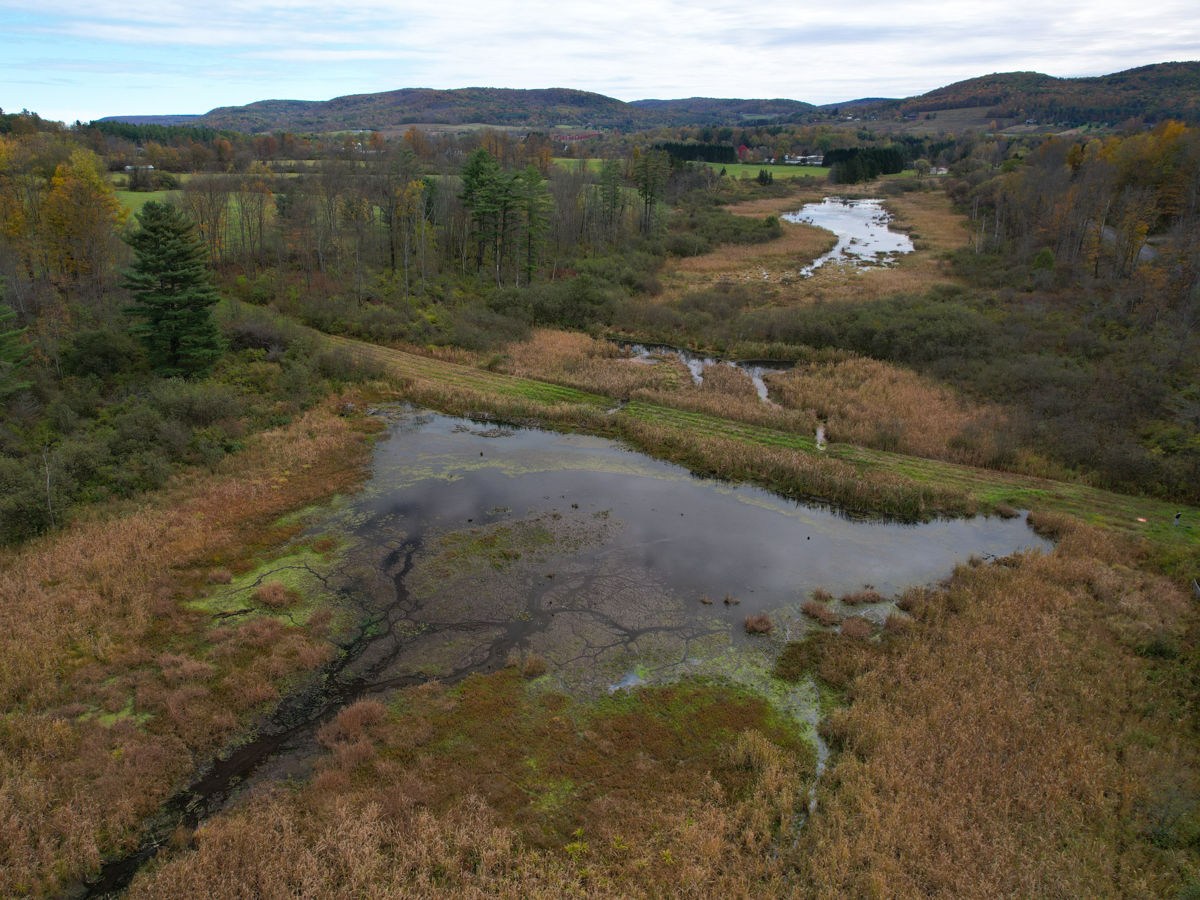
Photo: Chris Ray
Through their WQIP Land Acquisition contract, FLLT will protect at least 300 acres, building upon the land already conserved by FLLT in partnership with the City of Ithaca. FLLT will also protect, restore, and maintain any riparian buffers as needed.
An additional protected property in the Cayuga Lake watershed contains 15 acres and over 1,200 feet of frontage on Fall Creek, the source of drinking water for Cornell University and multiple municipalities. The Bolton Point Municipal Water System serves 30,000 people in Cayuga Heights, Dryden, Ithaca, and Lansing.
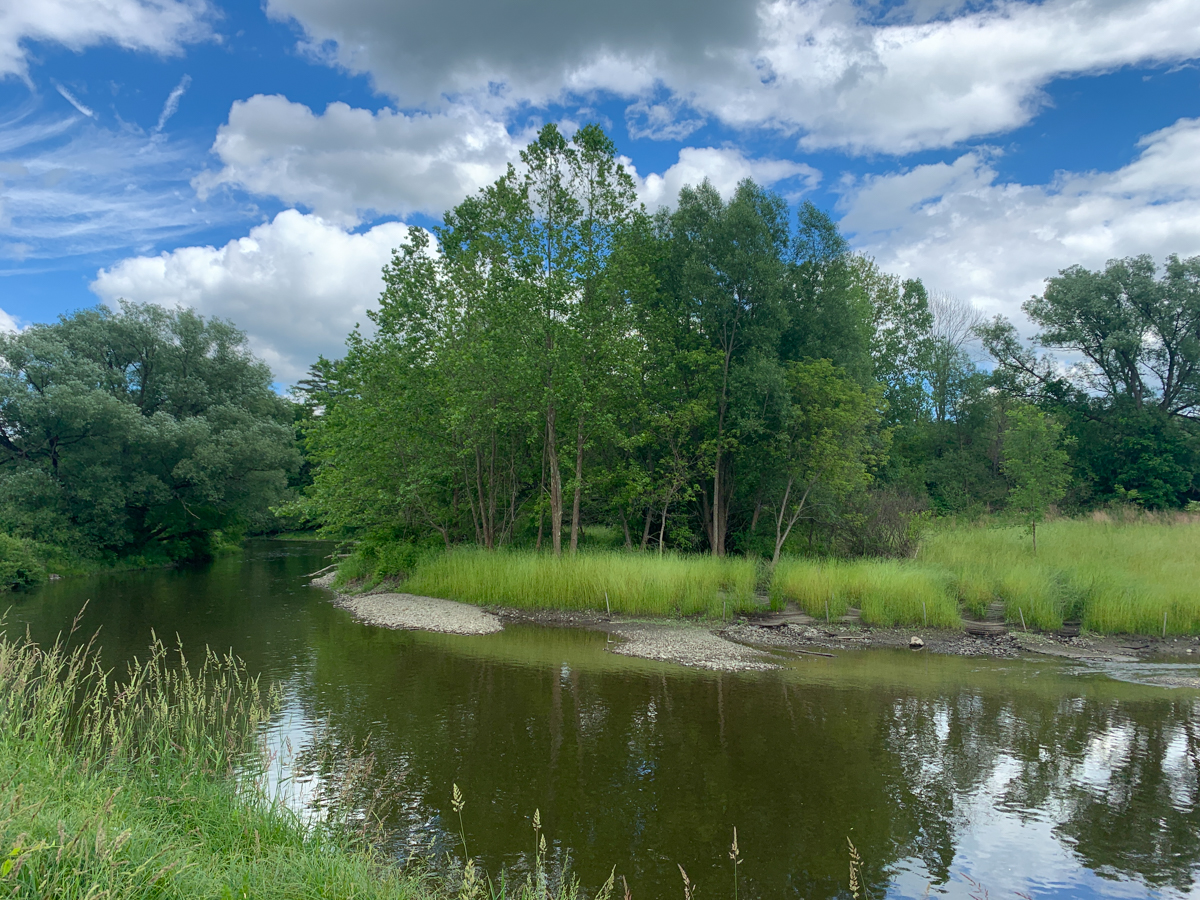
Photo: FLLT
A conservation easement on the property will protect a large natural vegetated buffer along the creek that helps filter potential contaminants and contributes to better water quality downstream.
Finger Lakes Land Trust President Andrew Zepp said, “We’re grateful for our strong partnership with New York State. Funding from the WQIP program allows us to quickly secure sensitive lands which are important for protecting water quality across the region.”
############
Water Quality Improvement Project Program (WQIP)
WQIP is a competitive reimbursement grant program that funds projects to directly improve water quality or habitat or protect a drinking water source. Earlier this year, DEC awarded more than $200 million through WQIP to support municipal wastewater treatment upgrades, polluted runoff abatement and control, land acquisition projects for drinking water protection, salt storage construction and road salt reduction practices, dam safety rehabilitation, repair and removal, aquatic connectivity restoration, marine district habitat restoration, and fish and wildlife habitat restoration and enhancement. More information is available on DEC’s WQIP website.
New York’s Commitment to Water Quality
New York State continues to increase its nation-leading investments in water infrastructure, with a total of $2 billion invested in water infrastructure since 2021. The recently announced FY27 Enacted Budget reaffirms New York’s commitment to clean water with an additional $750 million investment in Clean Water infrastructure as a first installment of Governor Hochul’s bold, five-year, $3.75 billion investment. This historic funding level will also continue to uplift and support New York’s premier water programs, including WQIP. The funding is in addition to other substantial water quality investments, including the $4.2 billion Clean Water, Clean Air and Green Jobs Environmental Bond Act, which is advancing historic levels of funding to update aging water infrastructure and protect water quality, strengthen communities’ ability to withstand severe storms and flooding, reduce air pollution and lower climate-altering emissions, restore habitats, and preserve outdoor spaces and local farms.